
- July 15, 2026
- by Admin
- SEO
- 0 Comments
If you’re evaluating an SEO agency and one of them offers to charge you only after they deliver results, you’ve run into pay-per-performance SEO. It’s one of the more debated pricing models in the industry — appealing on the surface, but worth understanding fully before you sign anything. Search engine optimization is a complex, long-term discipline, and how an agency structures its fees says a lot about how it will approach your website. This guide breaks down what pay-per-performance SEO means in 2026, how it compares to other pricing models, and how changes in AI-driven search and stricter quality standards have reshaped what “results” really mean.
What is Pay-Per-Performance SEO?
Pay-per-performance SEO (also called performance-based SEO or pay-for-results SEO) is a pricing model where an SEO agency only gets paid once it delivers agreed-upon results — typically tied to keyword rankings, organic traffic growth, or conversions.
The appeal is straightforward: instead of paying a flat fee regardless of outcome, you pay for outcomes only. This shifts financial risk from the client to the agency, and in theory, keeps the agency motivated to work harder than it might under a fixed retainer.
- In practice, how “performance” is measured varies significantly by provider:
- Keyword ranking milestones: payment triggers when a target keyword reaches a specific position (e.g., top 10, top 3)
- Organic traffic thresholds: payment tied to a percentage increase in search-driven visits
- Lead or conversion volume: payment based on qualified leads, form fills, or sales generated from organic search
The third option has become far more common in 2026, simply because rankings and raw traffic are easy to inflate with low-value, low-competition keywords that never generate a single customer.
Where MavRank fits in: we lean toward KPIs that actually move your business forward — organic traffic that converts, not vanity rankings. If you want a sense of what’s realistically achievable for your site, our SEO audit service is a good starting point before committing to any pricing model.
What results can I expect before I pay with pay-for-performance SEO?
With a pay-for-performance SEO model, you’ll see verified progress up front—before any invoice hits your inbox. Here’s what you can reasonably expect, assuming you’re working with a competent agency:
- Demonstrable ranking gains: You’ll typically see select target keywords rising in Google’s results, often validated through independent tools like SEMrush or Ahrefs. Payment is only due when those keywords hit agreed positions (think: landing in the coveted top 10 for your primary phrase).
- Measurable traffic growth: Watch for an uptick in organic visits, tracked via platforms like Google Analytics or Search Console. The agency will outline the growth targets in advance, and you only pay when those numbers are met.
- Real business outcomes: In 2026, most reputable agencies steer clear of vanity metrics. Instead, your payments are tied to meaningful actions—new qualified leads, completed form submissions, or verified online sales attributable to SEO improvements.
This approach means you’re not fronting money for promises or vague reports. The agency “shows its work” before requesting a payment, using transparent, third-party-verified data. It’s SEO with results you can see, not just hope for.
How Much Does Pay-Per-Performance SEO Cost?
Pricing for pay-per-performance SEO isn’t a one-size-fits-all answer — it hinges on several factors unique to your situation. The overall cost typically depends on:
- The difficulty and competitiveness of your chosen keywords
- Your industry’s landscape and how established your website is
- The kinds of results you want to achieve (rankings, traffic, or concrete leads)
Most agencies set a predefined fee for achieving agreed-upon results, such as moving a keyword into the top 10 or hitting a specific lead threshold. If the agency doesn’t deliver, you usually only pay a minimal setup or onboarding fee, if anything at all. No rankings or measurable results? No recurring charge beyond that initial startup cost.
In other words: you’re only charged when actual progress happens—making it a cost model that (at least in theory) closely aligns your spend with value delivered. However, since every site and niche is different, the exact amounts can vary widely. Expect higher fees when chasing competitive, high-traffic keywords (think “personal injury lawyer Chicago” or “cloud storage enterprise solution”), and lower charges for more niche or local phrases.
If you want a ballpark figure for your industry or a breakdown of what you might pay based on your specific goals, running a competitive analysis or requesting an SEO audit is a smart next step.
What Kind of Results Have Clients Achieved with Pay-For-Performance SEO?
It’s natural to wonder whether pay-for-performance SEO delivers tangible business impact or if the “pay when you win” model is just clever marketing. In reality, outcomes can be impressive—but, as with any SEO engagement, results depend on starting competition, chosen KPIs, and the quality of the agency’s work.
Real-World Performance Highlights
Here’s what clients commonly report when engaging pay-for-performance SEO providers:
- Substantial Organic Traffic Growth: Many businesses have seen organic website visits increase by 80%–500% within a year, especially when targeting keywords with high purchase intent.
- Top-Tier Keyword Rankings: Clients often achieve first-page results for dozens of agreed target keywords, even in competitive spaces. Progress may start slowly but can snowball as authority builds.
- More Qualified Leads & Conversions: When performance is tied to meaningful conversion metrics (not just traffic), businesses regularly report upticks in inbound leads, sales inquiries, and e-commerce transactions sourced from organic search.
- Reliable Project Delivery: Consistent achievement of monthly goals, proactive fixes for site issues (like resolving technical missteps or security problems), and transparent communication are key themes in positive feedback.
- Sustained Long-Term Impact: Some companies report year-over-year improvement, maintaining their rankings and traffic even after campaigns wrap up—provided foundational SEO work is solid.
What Clients Appreciate Most
- While experiences vary, the strengths that businesses highlight most include:
- Agencies are highly motivated to deliver on promises—since they don’t get paid otherwise.
- Progress is clearly tracked through mutually agreed KPIs, lending peace of mind to decision-makers.
- Service often extends beyond rankings, covering technical site health, proactive troubleshooting, and ongoing optimization.
- Responsive communication and transparency—no disappearing acts once results start rolling in.
Of course, no approach is perfect, and the best pay-for-performance partnerships start with clear definitions of “success” grounded in business outcomes, not vanity metrics.
What Local SEO Strategies Are Included in Pay-for-Performance SEO Services?
A solid pay-for-performance SEO plan doesn’t ignore local intent — in fact, local strategies often make or break results, especially for businesses tied to a physical location or defined service area.
Here’s what you can typically expect in the local playbook:
Google Business Profile optimization: This is foundational. Ensuring your profile is complete, up-to-date, and leverages every possible feature (hours, photos, Q&A, services, etc.) puts you in the best position to appear in the Map Pack.
- Local citations: Consistent, accurate business listings across trusted directories like Yelp, Apple Maps, Bing Places, TripAdvisor, and the Better Business Bureau help reinforce your legitimacy with both users and search engines.
- Location-specific content: Whether it’s landing pages crafted for each city or neighborhood you serve, or regularly publishing blog posts about local events and happenings, geo-targeted content signals real relevance.
- Review management: Proactive review generation (through post-purchase emails, in-store prompts, or QR codes) and prompt responses to feedback can move the needle for local rankings and trust.
- On-page local schema: Adding schema markup with local business details helps Google understand where you are and what you do, directly improving how your information appears in search.
Results under a performance contract are usually tied to measurable improvements — like increased visibility in local packs, higher foot traffic attributed to Google, more calls, or form submissions with geographic intent. If your SEO provider isn’t clear on which of these strategies will actually drive performance in your market, it’s worth asking pointed questions before moving forward.
What Does Search Intent–Led SEO Execution Mean (And Why Does It Matter)?
Let’s face it: not all Google searches are created equal. Someone typing “coffee” might be curious about the health benefits, looking for a café nearby, or checking how to make a perfect espresso — wildly different goals, even though the keyword is identical.
That’s where search intent–led SEO comes into play. Instead of simply sprinkling keywords around like confetti, this approach digs into what real people are truly hoping to find when they query Google (or Bing, or even DuckDuckGo for the privacy buffs). Are they hunting for information? Comparing products? Ready to buy?
By aligning your website’s content with different stages of the searcher’s journey—whether they’re researching, evaluating, or pulling out a credit card—you stand a much better chance of:
- Attracting visitors who stick around, rather than bounce
- Getting higher click-through rates because your content actually matches what searchers want
- Improving conversion rates, since you’re answering the questions that matter most
Think of it as writing for people, not just algorithms. In 2026’s AI-dominated landscape, search engines like Google are getting eerily good at sniffing out whether your page is truly relevant or just gaming the system.
Ultimately, intent-led execution is about serving up the right message to the right human at the right moment—boosting not just your rankings, but your bottom line.
Pay-Per-Performance SEO vs. Traditional SEO Pricing Models
Pay-per-performance SEO and traditional SEO pricing models refer to two different methods of remunerating SEO services.
Traditional SEO pricing is typically a monthly retainer or project-based fee, where you pay a set amount regardless of the exact outcome that month. This gives the agency stability to invest in your site’s technical health, content, and link building over time — work that doesn’t always show up as an immediate ranking jump but compounds over months.
Pay-per-performance flips that: you only pay once specific, pre-agreed metrics are hit. On paper, this looks like a better deal for the client. In reality, by 2026, pure “pay for rankings with zero base fee” arrangements have mostly disappeared from the market.
Budget Considerations
For businesses with limited or unpredictable revenue, putting large sums into a traditional SEO retainer can feel risky — especially when results aren’t guaranteed every month. That’s where pay-per-performance (PFP) SEO often appeals: you pay only when rankings, traffic, or conversions are delivered, making every marketing dollar work harder. If your budget is tight, PFP SEO can be a savvy way to control spend and reduce wasted investment. On the flip side, if you have more flexibility, traditional SEO models may allow for broader targeting and a more comprehensive approach, since agencies are able to invest in a wider range of keywords and longer-term strategies.
Here’s why:
Rankings for easy, low-competition keywords can be gamed quickly without producing real business value
Agencies operating with zero guaranteed revenue tend to under-invest in foundational work like technical SEO and quality content
Google’s increasing use of AI Overviews (now appearing on an estimated 13–15% of searches) means a “top 3 ranking” doesn’t guarantee the same click-through or traffic it did a few years ago
What replaced the pure model is a hybrid structure: a base retainer (often 60–70% of a standard monthly fee) plus milestone bonuses tied to meaningful outcomes. This gives the agency enough stability to do real, sustained work, while still tying part of their payment to results that matter.
The Importance of Optimizing for Both Broad and Long-Tail Keywords
Focusing on both broad and long-tail keywords is essential for building an SEO strategy that pays off in sustainable results. Broad keywords—think “running shoes” or “coffee shops”—help you cast a wide net, putting your business in front of large search audiences and building brand awareness. However, these phrases are often competitive and don’t always drive visitors close to making a purchase.
That’s where long-tail keywords come in. These specific search queries—like “waterproof trail running shoes for women” or “independent coffee shops near Union Square”—capture people who are further along in the buying journey and know exactly what they’re looking for. Targeting these search terms gives you a better shot at reaching the right customers just as they’re ready to take action.
The reality in 2026: search intent matters more than ever, and Google’s evolving algorithms (along with the rise of AI Overviews) reward sites that serve both broad topics and the nuanced questions searchers are asking. By optimizing for a mix of both, you not only drive more qualified traffic but also insulate your SEO efforts from the volatility of algorithm updates. Piecing together a keyword strategy that combines high-level visibility with targeted intent is a smart way to make your SEO investments count—especially in a landscape where everyone else is gunning for the same top spots.
Where MavRank fits in: our content creation and guest blogging services are built around this same logic. Sustainable, white-hat work that compounds over time rather than chasing short-lived ranking spikes.
How Pay-Per-Performance SEO Works in 2026
A performance-based engagement typically follows this structure:
- Baseline audit: the agency reviews your current rankings, traffic, and technical health to establish a starting point
- Research & Keyword Analysis: The Foundation Stage
Before any KPIs get set in stone, research is the unsung hero. In a modern pay-for-performance setup, everything starts with a clear-eyed assessment of your current state and the competitive landscape.
Here’s what that typically looks like:
- In-depth competitive analysis: The agency benchmarks your organic standings against key rivals using industry staples like Ahrefs, SEMrush, and Moz. This isn’t just about seeing who ranks for what—it’s about understanding who’s actually claiming customer intent and where opportunity gaps lie.
- Targeted keyword selection: Instead of chasing hundreds of irrelevant phrases, the focus is on mapping high-intent keywords to critical business goals—avoiding the all-too-common trap of “vanity metrics.”
- Strategic alignment: Research at this stage isn’t just plugging search terms into a tool and hoping for gold. It’s a collaborative process that combines your inside knowledge (think sales conversations and customer FAQs) with SEO data, ensuring every recommended keyword or content angle actually ladders up to real, measurable outcomes.
Ultimately, thorough research and realistic keyword strategy are what make those performance-based KPIs possible in the first place—removing the guesswork and setting the stage for accountability on both sides.
What Actually Happens During a Technical SEO Audit and Optimization?
This isn’t just a surface-level scan. A proper technical SEO audit in 2026 digs into the bones of your site:
- Site architecture review: Navigation, internal linking, and site hierarchy get mapped out to ensure search engines can crawl and understand every relevant page (no orphaned landing pages or dead-end blog posts).
- Crawlability and indexation: Tools like Screaming Frog, Sitebulb, or Semrush are leveraged to spot crawl errors, duplicate content, and broken links. Sitemap and robots.txt configurations are double-checked so Google can access what matters and ignore what doesn’t.
- Structured data & schema markup: Adding or refining schema (like FAQ, Product, or HowTo) helps your content stand out in SERPs and supports AI Overviews.
- Mobile and Core Web Vitals: Responsive design and site speed are non-negotiable. Mobile usability is tested across real devices, and metrics like Largest Contentful Paint (LCP) and Cumulative Layout Shift (CLS) are optimized to avoid Google penalties.
- Security and technical hygiene: HTTPS usage, canonical tags, redirect chains, and image/file optimization are all covered.
Once audit results are in, the real work begins—fixing what’s broken, patching weak spots, and building a technical foundation that gives your content and link-building efforts room to perform. This upfront investment is what lets the rest of your SEO strategy scale reliably, rather than being held back by invisible site issues.
- KPI agreement: both sides agree on specific, measurable targets (keywords, traffic %, or lead volume) and the timeline to hit them
- Execution: the agency runs its SEO work: technical fixes, content, and link building, such as SaaS link building campaigns for software companies
- Verification and payment: results are tracked (usually via Google Search Console or an agreed analytics tool), and payment is triggered once KPIs are verified
But there’s more to it than just ticking off a few tracked goals. A robust performance-based SEO model relies on ongoing, transparent analysis and reporting. That means not just watching rankings, but digging into conversion rates, traffic quality, and long-term ROI using search-first metrics. Continuous data-driven insights help refine the SEO strategy, ensuring that campaigns aren’t just hitting short-term targets but are actually moving the needle for your business over time.
One important 2026 shift: stricter E-E-A-T (Experience, Expertise, Authoritativeness, Trustworthiness) requirements mean agencies chasing quick performance-based payouts have less room to cut corners than they used to — thin, low-effort content and manipulative link schemes are far more likely to be caught by Google’s spam updates (Google rolled out significant core and spam updates earlier in 2026) before they’d ever pay off.
Where MavRank (http://mavrank.com) fits in: because our link building is entirely white-hat and manually vetted, our work holds up under this stricter scrutiny — which matters whether you’re on a retainer, a hybrid model, or evaluating a performance-based proposal from anyone.
What Off-Page SEO Tactics Are Used in Pay-For-Performance SEO?
Performance-based SEO agencies in 2026 take a pragmatic, quality-first approach when it comes to off-page tactics. The days of quick-fix link schemes are over, thanks to Google’s stricter spam policies and evolving E-E-A-T standards.
Here’s what you can expect from a modern pay-per-performance model:
- Manual, Reputable Link Building: Earning placements on trusted publications, industry blogs, and respected directories remains central. Outreach is human-driven—think HARO (Help a Reporter Out), guest posting on high-authority sites like Forbes or HubSpot, and collaborative content swaps.
- Strategic Digital PR: Agencies actively pitch stories, insights, or original research to journalists and influencers. Press mentions and earned links from sites like TechCrunch, Search Engine Journal, or industry-specific magazines feed both authority and referral traffic.
- Genuine Social Engagement: Social shares aren’t direct ranking signals, but organic engagement helps amplify your best content. Active participation on platforms like LinkedIn, X (Twitter), or niche forums can boost visibility and attract natural links.
- Brand Mentions & Citations: Even unlinked brand mentions—on review sites like G2, comparison lists, or podcasts—can reinforce your authority in Google’s eyes when they’re part of a pattern of positive signals.
In a pay-for-performance structure, these efforts are tightly focused on authority-building and actual outcome delivery: genuine improvements in rankings, traffic, or leads. Cut corners? Not here—just the kind of durable, white-hat off-page work that meets the current SEO climate head-on.
Pros of Pay-Per-Performance SEO
Let’s dive into the details of each advantage of pay-for-performance SEO:
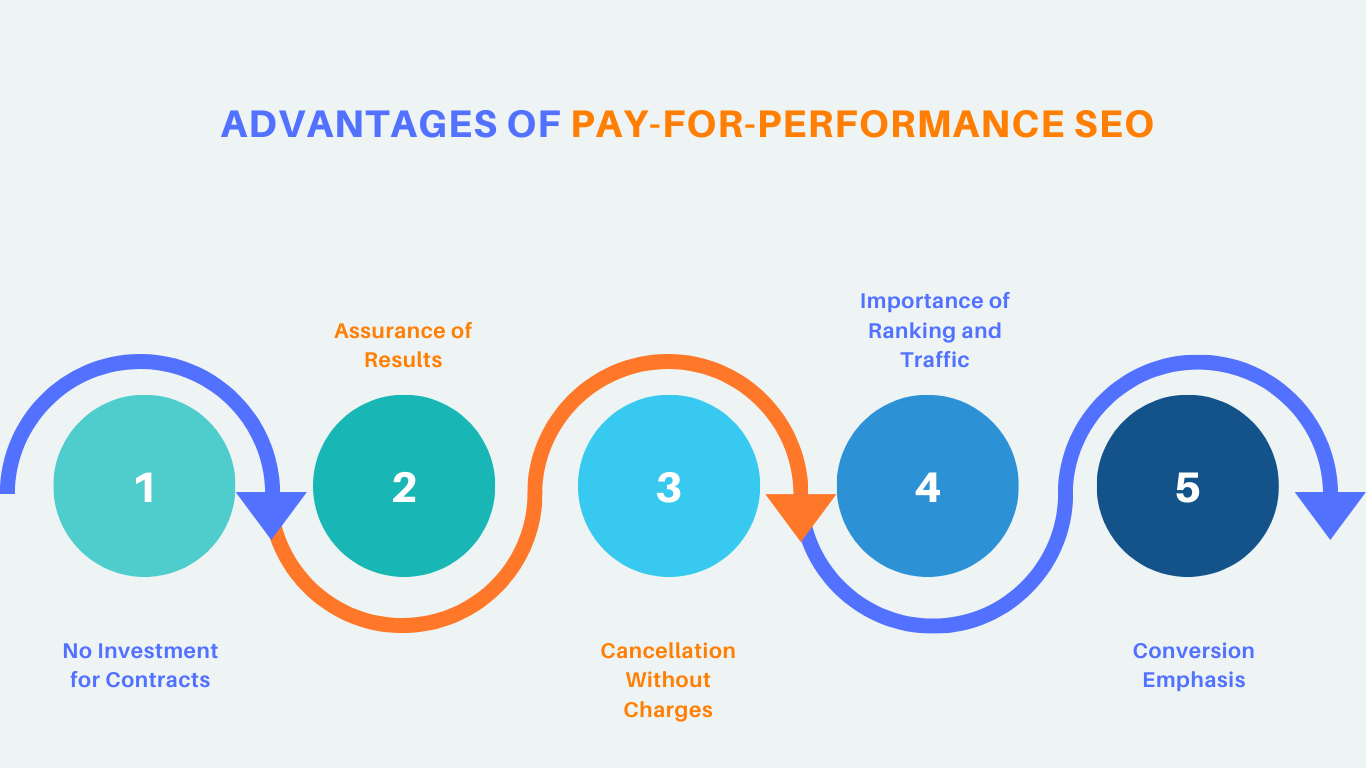
- No long-term contract risk: You’re not locked into a multi-year agreement. Payment is tied to specific goals like higher rankings or increased traffic, which suits businesses that want flexibility.
- Aligned incentives: The agency’s revenue depends on your results, which — at least in theory — keeps their strategy focused on outcomes rather than just billable hours.
- Easy cancellation: If goals shift or results stall, you’re not stuck paying for underperformance the way you might be on a fixed retainer.
- Clear, measurable KPIs: Because everything is tied to specific rankings, traffic percentages, or lead counts, it’s easier to track what you’re actually getting for your money.
- Conversion-focused thinking: Many performance models now emphasize conversions and qualified leads over raw traffic — a meaningful improvement over older models that rewarded traffic volume alone.
- Where MavRank fits in: whichever pricing model you land on, our content writing services are built to support the conversion-focused KPIs mentioned above — content that ranks and gets read, not just indexed.
Cons of Pay-Per-Performance SEO
Pay-per-performance SEO is quite attractive because you only pay when the job is done and the leads are generated.
However, there are some drawbacks to consider:
- Short-term thinking: Agencies chasing a fast payout can default to quick wins over sustainable strategy — including thin content or low-quality backlinks.
- Black-hat SEO risk: Because agencies want to demonstrate results fast, some resort to manipulative tactics that risk Google penalties, especially as spam detection has gotten more aggressive through 2026’s algorithm updates.
- Vanity metrics: Some agencies optimize for keywords or traffic that look impressive in a report but don’t drive real business value.
- Limited scope: Foundational work like technical SEO, site structure, and user experience can get deprioritized because it doesn’t produce an immediate, billable “result.”
- Overpromising: Be wary of any agency guaranteeing dramatic results in a few weeks — real organic growth is a months-long process, not a sprint.
AI Overviews complicate “success”: A keyword ranking in position 1–3 can still lose clicks to an AI Overview sitting above it, so ranking alone is no longer a complete measure of performance.
Where MavRank fits in: we’re upfront that sustainable SEO takes time. Our SEO audit gives you a realistic, evidence-based picture of what’s achievable and in what timeframe, rather than a number designed to close a sale.
It’s tempting to buy into promises of instant rankings or the idea that “SEO takes time” is just an excuse to bill without delivering. In reality, true organic growth doesn’t happen overnight—no matter what anyone tells you. That’s why we focus on transparency from the start, setting clear expectations about when you’ll see meaningful results. Instead of chasing quick wins or hiding behind vague timelines, we lay out exactly what milestones you can expect, and when. This way, you’re never left wondering if progress is being made or if you’re just paying to wait.
What Customer Feedback Says About Pay-for-Performance SEO
How does customer experience line up with the promise of pay-per-performance SEO?
Let’s break down the recurring themes from businesses that have actually tried it:
- Tangible Results: Across the board, users of pay-for-performance SEO models consistently point to visible improvements — think “steady monthly keyword growth,” more first-page rankings on Google and Bing, and ad campaigns that just keep humming along.
- Responsive Support: Clients often highlight how performance-focused agencies are quick on their feet, jumping in with solutions even when the challenge stretches beyond a simple keyword drop — like tackling a traffic drop tied to a technical hiccup. That blend of proactive troubleshooting and responsiveness matters.
- Clear Communication: Businesses appreciate ongoing, transparent updates — from action plans that clearly map out next steps to quick responses via email or video calls. This regular check-in and accountability is a big deal when you’re measuring actual results, not just promises.
- Consistency Over Time: While not always “overnight magic,” customer testimonials often mention month-after-month progress. Some even call out that, for the first time after trying several agencies, they’re finally seeing commitments actually delivered.
- Expectation Management: There’s a running theme — results do take time. Most customers who stick with pay-for-performance agencies see compounding gains over several months, rather than instant page-one success.
The common thread? When pay-per-performance SEO is done right (with a focus on strategies that actually move the needle), clients feel their investment is both respected and rewarded. The flexibility to pay based on outcomes — rather than empty hours — earns trust and, ultimately, repeat business.
Alternatives to Pay-Per-Performance SEO
Fixed Fee Models
- Monthly Retainer: A predictable, set monthly cost for ongoing SEO services. This supports consistent investment in your site and builds a longer-term working relationship between you and the agency.
- Project-Based Fee: Best for narrowly scoped work — a technical SEO audit, an on-page cleanup, or a batch of guest posts — with a single upfront payment for a defined deliverable.
Hybrid Models
- Retainer with Performance Incentives: The dominant model in 2026. A base fee covers ongoing work (technical SEO, content, link building), with bonuses tied to meaningful outcomes like organic revenue or qualified leads — not just rankings.
In-House SEO
- Building an internal team: Gives you full control over strategy and priorities, but requires hiring and retaining qualified SEO talent, which is a high ongoing cost. Many companies pair a lean in-house team with an outside partner for specialized work like content creation or link acquisition.
- Where MavRank fits in: we work with clients across all of these structures — whether you want a straightforward retainer, a project-based SEO audit, or ongoing support alongside your in-house team.
How to Choose the Right SEO Pricing Model for Your Business?
There’s no universally “best” model — the right fit depends on your business stage, risk tolerance, and how quickly you need results:
Startups and small budgets often benefit from a hybrid model — lower upfront risk, but enough agency investment to do real work.
Established businesses with a longer runway are usually better served by a monthly retainer, which supports deeper technical and content work over time.
Specific, narrow needs (a one-time technical fix, a content refresh, a batch of guest blogging placements) are well-suited to project-based pricing.
SaaS companies in particular should weigh SaaS-specific link building expertise heavily, since generic backlink campaigns often miss the niche relevance that actually moves rankings in competitive software categories.
Is Performance-Based SEO Right for You?
Before jumping in, ask: are you after massive growth and ready to demand measurable results from your SEO efforts?
Performance-based SEO can be a powerful tool if you:
- Target competitive keywords that have clear sales potential and attract meaningful search volume.
- View SEO as an essential part of your marketing mix — not just a checkbox.
- Prefer flexible payment options that align with your business cycles and appetite for risk.
- Focus on organic results, recognizing that roughly 80% of clicks still go to organic listings over paid ads.
If your strategy hinges on high-volume keywords and you see SEO as an investment (not just a cost), performance-based models can align agency incentives with your business outcomes. But if you’re just looking for a quick technical tune-up or a one-off campaign, project or hybrid models might be a smarter fit.
Ultimately, the right approach is the one that meets your current needs, supports your growth ambitions, and fits your appetite for risk — all while making sure your SEO partner is just as invested in your results as you are.
Whatever model you’re evaluating, ask the agency directly: what happens to foundational work (technical SEO, content quality) if performance targets are missed? Their answer tells you a lot about how they’ll actually treat your site.
What to Look for in a Performance-Based SEO Partner
Regardless of the pricing model, your choice of agency matters more than the contract terms themselves. As you compare providers, dig deeper into these essentials:
- Expertise and Experience: Review case studies and ask about their track record in your industry. A seasoned agency should be able to articulate not just what they do, but how they adapt strategies to evolving SEO landscapes—think Google’s AI Overviews and E-E-A-T guidelines.
- Transparency and Communication: Look for agencies that offer clear, regular reporting and set expectations on both wins and setbacks. Ask how often you’ll receive updates, what tools they use (Google Analytics, Search Console, Ahrefs, SEMrush), and how they explain changes in performance.
- Customized Strategies: Avoid one-size-fits-all solutions. The right agency will tailor its approach to your business goals, market, and site history—instead of forcing you into a template. Get specifics on how they approach content, technical fixes, and link building for your niche.
- Clear Pricing: Make sure you understand exactly what’s included in your fee or bonus structure. Are there charges for foundational work, or is everything tied to hitting KPIs? Don’t be shy about asking for a breakdown of deliverables.
- Referrals and Reviews: Check independent reviews on platforms like G2, Clutch, or Trustpilot, and ask for client references. Honest feedback from others who’ve navigated performance-based contracts can save you headaches later.
- White-Hat SEO Techniques: Verify that their tactics align with Google’s guidelines—no keyword stuffing, spammy backlinks, or AI-generated fluff. Ask for specifics about their link acquisition and content processes.
- Ability to Deliver Results: Ultimately, you want proof that they can actually move the needle—not just talk about it. Ask for real-world examples of outcomes: organic traffic gains, revenue growth, or qualified leads generated through SEO.
Conclusion
Pay-per-performance SEO remains appealing for businesses that want to minimize upfront financial risk and tie payment directly to measurable outcomes. But the pure “pay for rankings” version of this model has largely given way to hybrid structures in 2026. A reflection of how AI Overviews, stricter E-E-A-T standards, and more aggressive spam enforcement have made rankings alone an incomplete measure of real SEO success.
The success of any pricing model — performance-based, retainer. Or hybrid depends far more on the agency’s expertise, transparency, and commitment to white-hat practices than on the billing structure itself. Do your due diligence, ask specific questions about how KPIs are measured and verified, and choose a partner whose incentives are genuinely aligned with your long-term growth — not just a quick, gameable win.
If you’d like a clear-eyed view of where your site stands today, get in touch with our team for a starting-point conversation, or explore our full range of services to see which pricing structure would fit your goals.
Frequently Asked Questions
Is pay-per-performance SEO worth it in 2026?
It can be, but mostly in its hybrid form — a base fee plus performance bonuses — rather than a pure “pay only for rankings” arrangement. Pure performance-only deals with zero base fee are increasingly rare because they push agencies toward short-term, easily gameable tactics rather than sustainable growth.
What KPIs are typically used in performance-based SEO contracts?
The most common are keyword ranking milestones, organic traffic percentage increases, and lead or conversion volume from organic search. Conversion and lead-based KPIs have become more popular because they tie payment to outcomes that actually matter to the business, rather than just visibility.
Can pay-per-performance SEO hurt my website?
It can, if the agency resorts to black-hat tactics like keyword stuffing or low-quality backlinks to hit targets quickly. This risk is why it’s important to vet any agency’s approach to link building and content before agreeing to a performance-based contract — ask specifically how they source backlinks and whether their content practices align with white-hat standards.
How is “performance” verified in these contracts?
Most agreements rely on tools like Google Search Console and Google Analytics. Or third-party rank trackers to verify keyword positions, traffic changes, or conversions. It’s worth agreeing upfront on exactly which tool and reporting cadence will be used. So there’s no dispute over whether a milestone was actually hit.
What’s the difference between pay-per-performance SEO and a hybrid pricing model?
Pure pay-per-performance means you only pay once specific results are achieved, with no guaranteed base fee. A hybrid model combines a smaller guaranteed retainer (usually 60–70% of a standard fee) with additional bonuses tied to performance. Giving the agency enough stability to invest properly in your site while still rewarding real results.